
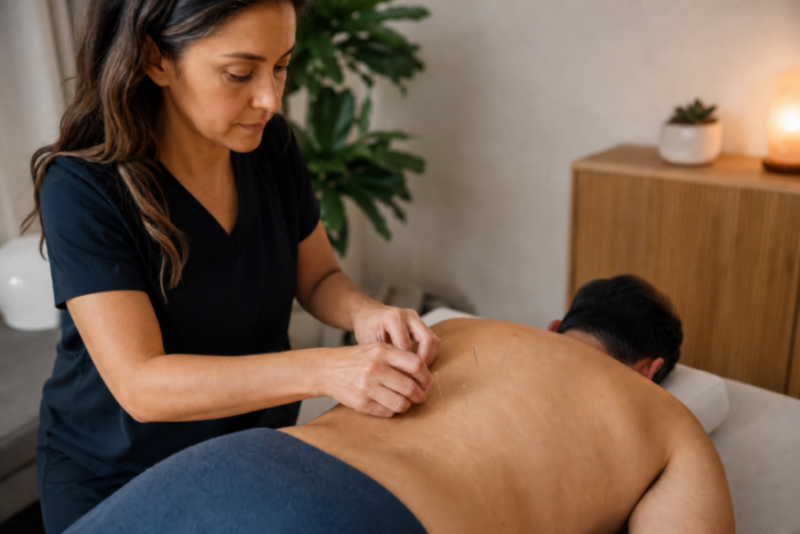
Overview: Acupuncture as a Complementary Option for Chronic Lower Back Pain
Chronic lower back pain is a common, often persistent condition that can affect sleep, mood, work and daily activities. At Abril Acupuncture Wellness, practitioner Veronica Abril, L.Ac., Dipl. Ac., offers individualized acupuncture treatment for chronic lower back pain focused on symptom relief, improved function, and patient-centered planning. This article summarizes the evidence-informed role of acupuncture, typical timelines for response, what happens during treatment courses, and practical aftercare strategies to support longer-term improvement. It also offers practical decision guidance so you can weigh acupuncture against or alongside other conservative options.
What the Evidence Says
Systematic reviews and clinical guidelines recognize acupuncture as one option among nonpharmacologic therapies for chronic low back pain. Clinical guidance from the American College of Physicians includes acupuncture as a reasonable noninvasive option for patients who prefer it or who seek alternatives to medications. The National Center for Complementary and Integrative Health (NCCIH) also provides accessible summaries about acupuncture’s potential benefits and safety considerations. These sources support shared decision-making: acupuncture may reduce pain and improve function for some people, but responses vary and outcomes are rarely immediate or guaranteed.
How Acupuncture Works — A Practical Summary
Traditional acupuncture involves gentle insertion of thin, sterile needles into specific points to influence local tissues, nervous system signaling, and pain processing. In a clinical setting, needling for lower back pain may target local muscles and connective tissue as well as distal points selected to address tension, inflammation, or stress. Adjunct modalities—such as electroacupuncture or moxibustion—are sometimes used when appropriate; these are offered selectively and only after a personalized assessment. For information about specific modalities we offer, see our Services and the pages on Electroacupuncture and Moxibustion.
From a modern physiology perspective, acupuncture appears to engage descending pain-modulating pathways, alter local blood flow, and reduce muscle hypertonicity—mechanisms that can complement mechanical and behavioral approaches. Clinically, purely neuropathic radicular pain (for example, severe sciatica with progressive weakness) often requires medical evaluation first; muscular or mechanical pain without red flags is commonly the type that shows more predictable improvement with a multimodal conservative plan that includes acupuncture.
Initial Consultation and Treatment Planning
Every treatment plan at Abril Acupuncture Wellness begins with a comprehensive consultation. Veronica Abril will review your medical history, prior treatments, pain patterns, sleep, stress and activity levels, and any red flags that require medical evaluation. This first visit includes a focused physical exam, discussion of realistic goals, and a shared plan outlining expected frequency and duration. If you are new to acupuncture, our page What to Expect at Your First Acupuncture Appointment in Rockville Centre offers practical preparation tips.
Is acupuncture right for me? Decision guidance
Consider acupuncture when you have persistent low back pain (commonly defined as lasting longer than about 12 weeks), when first-line self-care has not delivered sufficient relief, or when you prefer to minimize reliance on long-term medications. Seek immediate medical evaluation if you have any red flags—progressive leg weakness or numbness, saddle anesthesia, new bowel or bladder dysfunction, unexplained fever, or severe unremitting night pain. If imaging or specialist input is advised by your primary care provider, bring reports and images to your first acupuncture visit so care can be coordinated.
Typical Treatment Timeline: What Patients Often Experience
Responses to acupuncture vary. Below is a conservative, evidence-aware timeline to set realistic expectations.
First 1–2 Sessions (Weeks 0–2)
- Goal: establish baseline, begin addressing acute tension and pain, and assess sensitivity to needling.
- What many patients notice: some immediate but modest reduction in pain or increased mobility; others report relaxed muscles or improved sleep. A minority experience delayed or no change after the first session.
Short Course (4–6 Sessions; Weeks 2–6)
- Goal: build cumulative effect. Clinical trials and practice experience suggest several sessions are usually needed to observe a clearer pattern of benefit.
- What many patients notice: progressive improvement in daily function, more consistent pain relief, and better sleep or stress coping. Frequency is often one session per week or every 3–4 days depending on severity and clinical judgment.
Intermediate (8–12 Sessions; Weeks 6–12)
- Goal: consolidate gains, address contributing factors (posture, ergonomics, stress), and refine homecare plan.
- What many patients notice: sustained reductions in pain intensity, fewer flare-ups, and improved ability to engage in exercise and daily activities. Some patients will plateau earlier, while others continue to improve gradually.
Maintenance and Long-Term Strategy (After 3 Months)
- Goal: maintain function and prevent recurrence. Some patients benefit from occasional booster sessions; others may shift to self-care, exercise, or adjunct practices (e.g., mindfulness, physical therapy).
- What many patients notice: continued symptom control with fewer clinic visits, especially when combined with strengthening, flexibility work, and ergonomic changes.
Factors That Influence Timelines and Outcomes
Individual variability is the rule. Factors that commonly shape response include:
- Duration and underlying cause of the pain (longer-standing pain typically requires longer care)
- Presence of central sensitization or widespread pain
- Concomitant sleep disturbance, stress, or mood disorders
- Adherence to activity, exercise, and homecare recommendations
- Comorbid medical conditions and medications
Aftercare: Practical Steps to Support Treatment Gains
Acupuncture is most effective when integrated with practical self-care and realistic lifestyle adjustments. After a session, patients often ask what they can do to support continued improvement. Recommended aftercare includes:
Immediate Post-Session Care
- Rest briefly if you feel lightheaded; avoid strenuous activity for several hours.
- Stay hydrated and prioritize sleep that night—improvements in sleep often amplify pain relief.
- If you experience mild bruising or soreness at needle sites, warm compresses or gentle movement can help; severe or unusual symptoms should be reported immediately.
Ongoing Self-Care
- Gentle, regular movement: low-impact aerobic work (walking, stationary bike, swimming) and spinal mobility exercises help build resilience.
- Targeted strengthening and flexibility: a physical therapist or guided home program complements needling. Examples to discuss with your clinician include pelvic tilts (10–20 reps), bridge lifts (8–15 reps), bird-dog progressions (6–10 reps per side), and a hamstring stretch held for 30 seconds repeated 2–3 times. Start at a level that does not increase your baseline pain and progress gradually.
- Posture and ergonomics: small workplace or home adjustments—lumbar support in seating, screen height at eye level, and scheduled movement breaks—can reduce recurrence.
- Stress-management practices: mindfulness, breathing exercises, or relaxation techniques often reduce pain sensitivity. Even brief daily practices (5–10 minutes) can support progress.
Practical example of a short daily routine to discuss with your clinician: 5–10 minutes of walking to warm up, 2 sets of 8–12 bridge lifts, 1 minute of gentle spinal cat–cow mobility, followed by a 30-second hamstring stretch per leg. Adjust frequency and intensity to tolerance and guidance from your clinician or physical therapist.
When Acupuncture May Be Combined With Other Therapies
Acupuncture can be part of a multimodal plan. Depending on assessment, Veronica may coordinate care with your primary clinician or recommend adjunctive conservative options such as manual therapy, exercise therapy, or behavioral approaches. Abril Acupuncture Wellness offers several supportive treatments—details are on our Services page. Our team emphasizes safety and evidence-informed choices rather than single-shot solutions.
Decision guidance: combine acupuncture with structured physical therapy when mechanical deficits (movement patterns, weakness, reduced flexibility) are present; consider mind–body programs when stress or sleep problems are major contributors. If you are taking prescription pain medications, do not stop them without discussion with the prescriber—acupuncture may help reduce reliance over time but medication adjustments should be coordinated clinically. For patients in Rockville Centre and surrounding Nassau County, we routinely collaborate with local primary care and rehabilitation providers; ask us for referrals if you want coordinated care.
Safety, Risks, and Informed Consent
When performed by a licensed practitioner using single-use, sterile needles, acupuncture has a favorable safety profile. Common minor effects include transient soreness, slight bruising, or fatigue. Serious complications are rare when standards of care are followed. At your initial visit we discuss potential risks, obtain informed consent, and tailor needling to any medical concerns or bleeding risk. For questions about clinic policies or to schedule your consultation, visit Contact Us.
Realistic Expectations and Patient-Centered Goals
At Abril Acupuncture Wellness we emphasize conservative, patient-centered goals: reducing pain intensity, improving sleep and function, and minimizing reliance on medications where appropriate. Veronica Abril, L.Ac., Dipl. Ac., works collaboratively with each patient to define meaningful milestones and to adjust the plan if progress is slower than expected. We do not promise cures or dramatic single-session outcomes; instead we focus on steady, measurable improvements and clear communication.
How to Get Started
If chronic lower back pain is limiting your life and you’re interested in a conservative, evidence-informed approach, book a consultation to discuss whether acupuncture is a suitable option for you. Learn more about our practice and approach on the About Us page and explore common questions on our Frequently Asked Questions page. To schedule an appointment, Book a Consultation via our contact page. When you call or book online, be prepared to share a list of current medications, relevant imaging reports if available, and a brief history of prior treatments to help us tailor an efficient plan.
References and Further Reading
- Noninvasive Treatments for Acute, Subacute, and Chronic Low Back Pain: Clinical Practice Guideline, American College of Physicians
- Acupuncture: What You Need To Know, National Center for Complementary and Integrative Health (NCCIH)
Article credit: Veronica Abril, L.Ac., Dipl. Ac. Abril Acupuncture Wellness — Rockville Centre. This content is educational and not a substitute for medical advice. If you have new or worsening symptoms (for example, numbness, weakness, bowel or bladder changes, or severe unremitting pain), seek prompt medical attention.
How many acupuncture sessions will I need to see improvement for chronic lower back pain?
Responses vary, but most patients begin to notice changes within 4–6 sessions. A typical course ranges from 6–12 sessions over several weeks; some people need ongoing maintenance visits. Your practitioner will set individualized expectations during the initial consultation.
Is acupuncture safe for chronic lower back pain?
When provided by a licensed practitioner using single-use sterile needles, acupuncture has a favorable safety profile. Minor side effects such as temporary soreness or bruising can occur. Your clinician will review risks and adapt treatment to any medical conditions during informed consent.
Will acupuncture replace physical therapy or other treatments?
Acupuncture is often integrated with other conservative approaches. It can complement physical therapy, exercise, and ergonomic changes but is not usually framed as a standalone cure. Collaborative planning helps tailor the best combination for your needs.
How should I care for myself after an acupuncture session?
Rest briefly if needed, stay hydrated, and avoid strenuous activity for a few hours. Use heat for muscle tightness and gentle movement to maintain mobility. Consistent sleep, stress management, and a tailored exercise plan support longer-term benefits.
Can acupuncture provide permanent relief from chronic lower back pain?
No treatment guarantees permanent relief. Many patients experience meaningful and sustained improvements, especially when acupuncture is combined with self-care and lifestyle changes. We focus on realistic, measurable goals rather than guarantees.
How do I start treatment at Abril Acupuncture Wellness?
Begin with a consultation to review your history and create a personalized plan. Learn what to expect on our preparation page and schedule an appointment through our Contact Us page.