
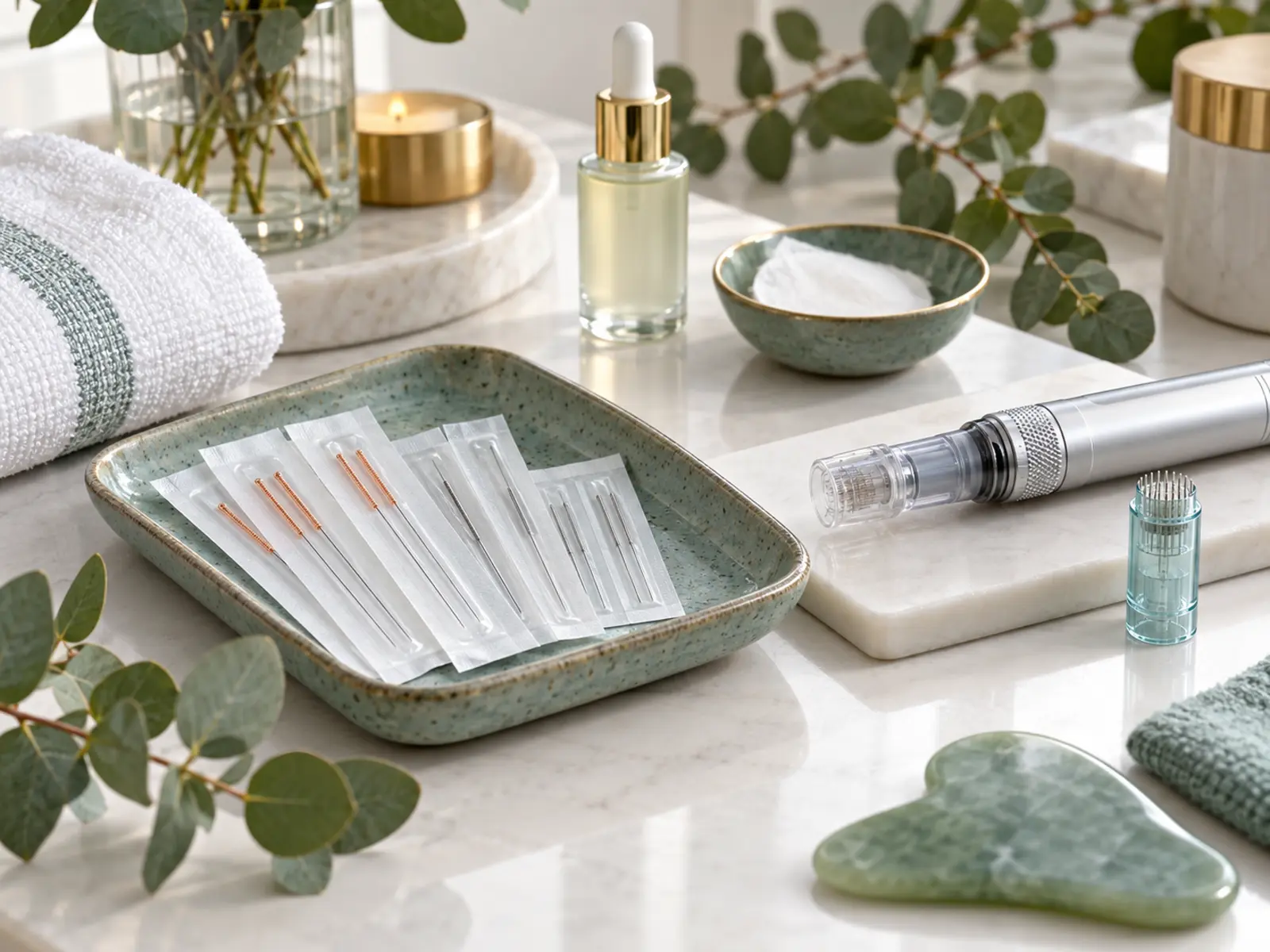
Interest in natural-looking skin care has expanded beyond products and traditional facials. Many people now explore facial rejuvenation acupuncture, microneedling, or nanoneedling to support smoother texture, a refreshed appearance, hydration, or a more luminous complexion. Although these services are sometimes grouped together, they are not interchangeable.
They differ in technique, intensity, expected skin response, downtime, safety considerations, and the types of goals they are designed to address. Choosing well begins with understanding those differences and having a candid consultation about your skin, medical history, expectations, and tolerance for recovery.
At Abril Acupuncture Wellness, cosmetic treatments are approached conservatively and individually. The goal is not to promise dramatic transformation or guarantee a particular result. It is to select a service that fits the person, explain what it can and cannot reasonably do, and prioritize safe, thoughtful care.
What Is Facial Rejuvenation Acupuncture?
Facial rejuvenation acupuncture is an acupuncture treatment that includes selected points on the face and body. Very fine sterile needles may be placed in areas chosen to support circulation, muscle balance, skin vitality, and overall wellness. Because it is an acupuncture service, the consultation may consider sleep, stress, digestion, tension, headaches, and other concerns alongside cosmetic goals.
Some people prefer this whole-person aspect. The appointment is not only about treating the skin’s surface; it may also be a quiet, restorative part of a broader wellness routine. However, facial acupuncture is not a facelift, filler, neuromodulator, laser treatment, or surgical procedure. It should not be presented as producing equivalent changes.
Evidence specifically supporting cosmetic facial acupuncture remains limited compared with research on medical microneedling. Small studies and clinical reports have explored facial elasticity and appearance, but stronger research is needed. Descriptions should therefore focus on intended support and individualized experience rather than guaranteed collagen production, wrinkle removal, or permanent lifting.
What Is Microneedling?
Microneedling uses a device with multiple small needles to create controlled micro-injuries in the skin. The purpose is to stimulate the skin’s wound-healing response and support collagen remodeling. Depending on the device, depth, and treatment plan, professional microneedling may be used to address the appearance of certain acne scars, texture irregularities, and fine lines.
The U.S. Food and Drug Administration has authorized microneedling devices for specific uses, including improving the appearance of facial acne scars, facial wrinkles, and abdominal scars in adults aged 22 or older. Authorization applies to particular devices and indications; it does not mean every pen, cartridge, cosmetic claim, or treatment setting is FDA authorized.
Microneedling creates a more pronounced skin response than facial acupuncture or superficial nanoneedling. Temporary redness, tightness, dryness, peeling, tenderness, pinpoint bleeding, or swelling may occur. Recovery varies by depth, device, skin, and treatment area.
What Is Nanoneedling?
Nanoneedling generally refers to a superficial cosmetic technique that uses very small cone-shaped or textured tips rather than conventional microneedles penetrating to deeper levels. It is commonly intended to support product application, hydration, and a smoother or brighter-looking surface with less visible downtime.
The term is not used uniformly across every manufacturer or practice. Devices, tip materials, protocols, and permitted scope can vary. Ask what device will be used, whether the skin is actually penetrated, what products are applied, how equipment is disinfected or disposed of, and what results are realistic.
Nanoneedling is usually considered gentler than microneedling, but gentler does not mean risk-free. Irritation, sensitivity, allergic reactions to topical products, or infection can occur if products or sanitation are inappropriate. A good consultation should review sensitivities, active skin conditions, and recent procedures.
Facial Acupuncture vs. Microneedling vs. Nanoneedling
The best option depends on your goal rather than which treatment sounds newest or most intensive.
Primary Focus
Facial rejuvenation acupuncture combines cosmetic goals with a broader acupuncture treatment. It may appeal to someone seeking a subtle, gradual, whole-person experience.
Microneedling is a more intensive skin-remodeling procedure. It may be considered when texture, certain scars, or fine lines are the main concern and the person is an appropriate candidate.
Nanoneedling is more surface-focused. It may suit someone prioritizing hydration, temporary brightness, or smoother-looking texture with less downtime.
Treatment Sensation
Facial acupuncture uses individual fine needles at selected points. Sensations may include a brief pinch, tingling, heaviness, or warmth.
Microneedling passes a cartridge over the skin and can feel scratchy, prickly, warm, or uncomfortable. Treatment depth and the use of topical numbing products affect the experience. The FDA has warned consumers about potentially dangerous high-concentration topical numbing products marketed for cosmetic procedures; only use products recommended and applied appropriately by a qualified professional.
Nanoneedling typically feels lighter and more superficial, though sensitive skin may still react.
Downtime
Facial acupuncture usually has minimal downtime, although small bruises or temporary tenderness can occur.
Microneedling can cause visible redness and sensitivity for several days, with peeling or dryness lasting longer in some cases. Strong sun exposure, vigorous exercise, heat, swimming, and certain skincare products may need to be avoided temporarily according to individualized aftercare.
Nanoneedling commonly involves less downtime, but temporary redness or sensitivity is still possible.
Expected Pace
None of these services should be sold as an instant, permanent transformation. Facial acupuncture and nanoneedling are often chosen as a series or periodic maintenance. Microneedling also may require multiple treatments, with changes developing over time as the skin heals and remodels.
The appropriate number and spacing of treatments depend on the service, skin response, device, and goal. More frequent or deeper treatment is not automatically better and can increase irritation or complications.
Safety Considerations for Microneedling
The FDA lists common risks including redness, dryness, roughness, tightness, itching, peeling, discomfort, burning, bruising, bleeding, and crusting. Less common risks can include pigment changes, cold-sore reactivation, swollen lymph nodes, infection, and persistent symptoms.
Microneedling may not be appropriate for people with active skin infection, inflamed acne in the treatment area, certain bleeding conditions, impaired healing, some immune conditions, or a tendency toward problematic scarring. Pregnancy, recent isotretinoin use, active cold sores, recent procedures, medications, and skin sensitivities should be discussed during consultation.
The FDA also distinguishes traditional microneedling from radiofrequency microneedling. RF microneedling combines needles with radiofrequency energy and carries different risks. In 2025, the FDA issued a safety communication after reports of serious complications with certain RF microneedling uses, including burns, scarring, fat loss, disfigurement, and nerve damage. Abril’s standard microneedling service should not be described as RF microneedling unless that technology and its specific protocols have been confirmed.
Safety Considerations for Facial Acupuncture
Acupuncture is generally considered safe when performed by a qualified practitioner using sterile needles. Temporary bruising, minor bleeding, soreness, or lightheadedness can occur. Serious adverse events are rare but possible.
Tell your practitioner if you take blood thinners, bruise easily, have a bleeding disorder, are pregnant, have an active infection, recently received injectables or another facial procedure, or are preparing for an event where even a small bruise would be inconvenient.
Timing matters. Combining facial acupuncture with injectables, laser procedures, chemical peels, surgery, or microneedling requires appropriate spacing and coordination with the professionals providing those treatments.
Products Matter
Cosmetic procedures often involve cleansers, serums, or post-treatment products. A product that is safe on intact skin is not automatically appropriate when the skin barrier has been disrupted. The FDA notes that microneedling devices are not approved for delivering cosmetics, topical medications, vitamins, drugs, or platelet-rich plasma into the skin.
Ask what will be applied before, during, and after treatment. Disclose fragrance allergies, contact dermatitis, eczema, rosacea, acne treatments, retinoid use, and previous reactions. Avoid experimenting with strong exfoliants or unfamiliar active ingredients immediately after a procedure.
How to Choose the Right Option
Start by naming the result you want in specific, realistic terms. “I want better skin” is broad. Are you concerned about acne-scar texture, dehydration, dullness, fine lines, muscle tension, or maintaining a rested appearance? Do you want a gentle wellness-oriented experience, or are you comfortable with a procedure that intentionally creates a healing response and visible downtime?
Consider the following:
- Your primary skin goal
- Your medical and dermatologic history
- Current prescriptions and topical products
- Tendency to bruise, scar, or develop pigment changes
- Active acne, rosacea, eczema, cold sores, or infection
- Recent injectables, peels, lasers, surgery, or sun exposure
- Comfort with needles and procedural sensation
- Available recovery time
- Upcoming weddings, photographs, travel, or major events
- Budget for a recommended series without assuming results
A consultation should end with a clear recommendation, alternatives, expected temporary effects, aftercare, and reasons to postpone treatment.
Preparing for a Cosmetic Treatment
Follow the specific instructions provided for your selected service. In general, arrive with clean skin when requested and disclose all skincare products, supplements, and medications. Do not conceal a recent sunburn, cold sore, infection, or reaction because you are eager to keep an appointment. Rescheduling is preferable to treating compromised skin.
Avoid planning an unfamiliar procedure immediately before an important event. Even a treatment associated with minimal downtime can produce an individual reaction. Allow enough time to observe how your skin responds.
Do not use unapproved numbing products or apply more than directed. FDA warnings have highlighted serious risks from certain high-concentration lidocaine products used around cosmetic procedures.
Aftercare and When to Seek Help
Aftercare differs by service and intensity. You may be advised to use gentle cleansing, simple hydration, sun protection, and temporary avoidance of retinoids, exfoliating acids, scrubs, heat, swimming, or heavy exercise. Follow the instructions you receive rather than a generic social-media routine.
Contact the treating professional if symptoms are more intense or longer-lasting than expected. Seek prompt medical care for signs of significant infection, severe swelling, blistering, spreading redness, increasing pain, eye symptoms, difficulty breathing, or another concerning reaction.
Frequently Asked Questions
Which treatment has the least downtime?
Facial acupuncture and nanoneedling generally involve less visible downtime than microneedling, but bruising, redness, or sensitivity can still occur. Individual reactions vary.
Is microneedling the same as nanoneedling?
No. Professional microneedling uses needles to create controlled micro-injuries at selected depths. Nanoneedling is usually more superficial and focused on the skin’s surface, although terminology and devices vary.
Can facial acupuncture replace Botox or fillers?
No. They are different treatments with different mechanisms and expected effects. Facial acupuncture should not be represented as equivalent to injectables or surgery.
Can I combine these treatments?
Possibly, but they should not simply be stacked together. Timing depends on your skin, treatment intensity, healing, and other procedures. Ask each qualified provider to coordinate appropriate spacing.
How soon will I see results?
Some people notice temporary brightness or hydration quickly, while texture or collagen-related changes may take longer. Results vary, and no outcome can be guaranteed.
Cosmetic Acupuncture and Skin-Rejuvenation Care in Rockville Centre
The right treatment is the one that fits your goals, skin, schedule, and comfort—not necessarily the most aggressive option. A careful consultation can help you understand whether facial rejuvenation acupuncture, nanoneedling, or microneedling is the most appropriate place to begin.
Abril Acupuncture Wellness offers individualized cosmetic and wellness services in Rockville Centre for patients across Nassau County and Long Island. Recommendations are designed to support natural-looking care without promises of a cure or guaranteed transformation.
Book an appointment online or call 516-402-9702.
This article is for general educational purposes and is not a substitute for diagnosis or treatment from a qualified healthcare professional. Individual results vary.