
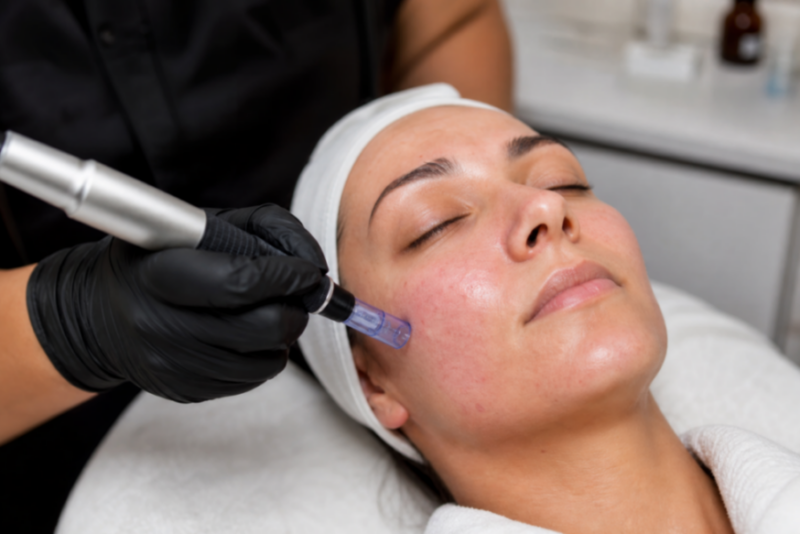
Microneedling can be a useful, low-downtime option for improving skin texture and supporting conservative cosmetic goals. At Abril Acupuncture Wellness, Veronica Abril, L.Ac., Dipl. Ac., emphasizes careful consultation, realistic expectations, and evidence-informed aftercare. This article explains common microneedling risks and recovery timelines, how to troubleshoot problems, and when to seek professional care.
How microneedling works: a brief overview
Microneedling uses tiny sterile needles to create controlled micro-injuries in the skin. These microchannels stimulate a wound-healing response that can remodel collagen and improve surface texture. Devices and depth settings vary depending on skin concerns. For very superficial cosmetic approaches, Abril Acupuncture Wellness also offers nanoneedling and conservative facial rejuvenation options described on our Facial Rejuvenation page.
Typical needle-depth ranges used by clinicians are chosen to match the goal: lower depths (around 0.25–0.5 mm) can increase product absorption and produce mild resurfacing with minimal downtime; moderate depths (about 0.5–1.5 mm) are commonly used for general collagen stimulation and fine lines; and greater depths (above ~1.5 mm) may be reserved for deeper acne scar remodeling or for body areas and are used conservatively and in staged sessions. Your provider will recommend a depth based on skin thickness, the target concern, and an assessment of healing capacity.
Common microneedling risks
No procedure is risk-free. Understanding the typical and less common risks of microneedling helps patients make informed choices and recognize when to call a clinician.
Expected, short-term effects
- Redness and mild swelling: Most patients experience erythema similar to a sunburn immediately after treatment.
- Pinpoint bleeding and bruising: Minor bleeding during treatment and small bruises afterward are common, especially with deeper settings or in thin skin.
- Sensations of tightness, tingling, or heat: These symptoms typically lessen within hours to a few days.
Less common but important risks
- Infection: Because microneedling breaches the skin barrier, there is a small risk of bacterial, viral (e.g., herpes simplex), or fungal infection if aseptic technique or aftercare is inadequate.
- Postinflammatory hyperpigmentation (PIH): Especially in darker skin types or after sun exposure, transient or longer-lasting pigmentation changes can occur.
- Scarring or textural irregularities: Rare with properly performed superficial treatments, but possible if overly aggressive depths are used or if healing is complicated.
- Allergic reactions: To topical products applied immediately after needling (serums, vitamins) rather than the needles themselves.
Expected healing timeline
Recovery varies with device type, needle depth, and individual factors. Below are generalized timelines; your provider will tailor expectations to your treatment plan.
Immediate (0–24 hours)
- Redness, warmth, and pinpoint bleeding during or just after treatment.
- Skin feels tight and slightly tender.
Early recovery (2–7 days)
- Redness and swelling typically improve substantially by day 2–3. Mild flaking, dryness, and roughness are common as the epidermis renews.
- Avoid makeup, vigorous exercise, and direct sun exposure during this period per your provider’s instructions.
Intermediate healing (1–4 weeks)
- Skin texture and tone begin to show improvement as collagen remodeling initiates. Any lingering pigmentation changes may gradually fade.
- Full collagen remodeling continues for several months; visible improvement accrues over time and with planned repeat sessions when appropriate. Many treatment plans schedule repeat sessions every 4–8 weeks depending on goals.
Troubleshooting: signs that need attention
Most post-procedure symptoms resolve without intervention. Contact your provider if you notice:
- Increasing redness, warmth, swelling, or pain after the first 48 hours (possible infection or inflammatory reaction).
- Pustules, oozing, or crusting beyond the expected mild scabbing period.
- Clustered blisters or cold-sore–type lesions, which may indicate herpes simplex reactivation.
- New or worsening dark spots (hyperpigmentation) that appear within days to weeks.
If you have systemic symptoms such as fever, chills, or spreading redness, seek urgent medical care. These signs can indicate a serious infection and require prompt treatment.
In clinical practice, when an infection is suspected your provider may take a focused history and exam, swab the area if appropriate, and prescribe topical or oral antibiotics for bacterial infections or antiviral therapy if herpes simplex is suspected. Early communication with your clinic helps guide whether conservative home care or formal medical treatment is needed.
Reducing risk: consultation, device selection, and aftercare
Risk reduction begins before treatment. At Abril Acupuncture Wellness we prioritize patient-centered planning and conservative approaches.
Thorough consultation and candid assessment
- Review medical history, medications (including blood thinners and isotretinoin), prior procedures, and history of abnormal scarring or cold sores. Some conditions or recent medications may contraindicate microneedling.
- Discuss realistic expectations and alternative options, including nanoneedling or facial acupuncture, which may be better suited for some goals.
Aseptic technique and trained providers
Choose a licensed, trained clinician who uses single-use sterile needle cartridges or properly sterilized instruments, follows infection-control protocols, and documents treatment parameters. Our microneedling program emphasizes conservative depths and careful technique; learn more on our Microneedling service page.
Aftercare essentials
- Keep the area clean and follow the clinic’s topical regimen. A gentle, non-foaming cleanser or sterile saline rinse is often recommended in the first 24–72 hours, followed by a hydrating, barrier-supportive moisturizer (look for ceramides, hyaluronic acid, or panthenol).
- Avoid active ingredients like retinoids, exfoliants, and strong acids until cleared by your clinician. This minimizes irritation and PIH risk.
- Sun protection is critical. Use broad-spectrum sunscreen (SPF 30+), preferably a mineral (physical) sunscreen early in recovery, and avoid direct sun exposure during the early phase to reduce the risk of PIH.
- Avoid makeup for the first 24–48 hours or as advised; if you must use makeup later, choose non-comedogenic formulations, apply gently, and use clean brushes or disposable applicators.
- Report symptoms consistent with infection, herpes reactivation, or unusual scarring promptly.
Special considerations
Skin of color
People with darker skin tones have a higher risk of postinflammatory hyperpigmentation. Conservative settings, proper sun protection, and pre/post-treatment strategies can mitigate risk. Discuss this explicitly during your consultation so treatment can be tailored.
Medications and recent procedures
Certain medications (like oral isotretinoin) or recent laser procedures may increase risk of complications. A commonly advised precaution is to avoid microneedling while actively taking isotretinoin and to allow a waiting period after completing therapy—often discussed as 6–12 months—though the exact timing should be confirmed with your prescribing clinician and your microneedling provider. Provide a complete list of medications and recent treatments during intake so your clinician can advise on timing and suitability.
Combining treatments
Combining microneedling with topical agents, light therapies, or acupuncture-based facial rejuvenation may be appropriate in a coordinated plan—but sequencing and timing matter. For example, we may recommend completing a course of microneedling and allowing full epidermal recovery before introducing energy-based devices, or using nanoneedling as a low-downtime complement between deeper microneedling sessions. Some patients opt to space sessions during months with lower sun exposure to reduce PIH risk. Discuss evidence, expected benefits, and trade-offs with your provider—our approach at Abril Acupuncture Wellness integrates conservative cosmetic options with whole-person care; see our Facial Rejuvenation and general Services pages for how modalities can complement each other.
How Abril Acupuncture Wellness approaches microneedling care
Veronica Abril, L.Ac., Dipl. Ac., frames microneedling and nanoneedling as part of a broader, patient-centered toolkit for conservative cosmetic goals. Our clinical priorities are:
- Individualized consultation and informed consent that emphasize safety and realistic outcomes rather than guarantees.
- Conservative treatment settings and staged plans that allow assessment of healing before deeper work.
- Clear aftercare instructions and accessible follow-up to troubleshoot recovery issues early.
If you’re considering microneedling, schedule a consultation so we can review your history, examine your skin, and develop a plan aligned with your goals. Book a consultation on our Contact Us page.
When to avoid microneedling
Microneedling is not appropriate for everyone. Contraindications commonly include active infection at the treatment site, uncontrolled acne, recent isotretinoin use, keloid-prone scarring without specialist input, and certain autoimmune conditions. Discuss these issues during your consult so we can recommend safe alternatives, such as gentler nanoneedling or facial acupuncture.
Evidence and reputable sources
Authoritative dermatology and medical resources provide overviews of indications, safety considerations, and recommended precautions for microneedling. For patient-facing summaries, see the American Academy of Dermatology (AAD) and the Cleveland Clinic: American Academy of Dermatology: Microneedling and Cleveland Clinic: Microneedling. These resources reinforce the importance of proper technique, infection control, and individualized treatment planning.
Takeaway
Microneedling can offer modest cosmetic benefits with generally predictable short-term recovery when performed by a trained clinician using appropriate techniques. The most important elements for safety are a careful pre-treatment assessment, sterile procedure technique, conservative settings tailored to your skin, and diligent aftercare. At Abril Acupuncture Wellness, Veronica Abril emphasizes evidence-informed counseling, realistic expectations, and accessible follow-up. To discuss whether microneedling or a conservative alternative is right for you, book a consultation.
For practice policies, please see our Privacy Policy and Cookie Policy.
Frequently Asked Questions
How long does it take to recover from a microneedling session?
Most people see significant improvement in redness and swelling within 48–72 hours. Mild flaking and dryness can continue for up to a week. Collagen remodeling that drives longer-term improvements typically occurs over weeks to months. Healing time varies with needle depth and individual factors.
What are the most common side effects of microneedling?
Common short-term effects include redness, mild swelling, pinpoint bleeding, and tightness. These usually resolve within days. Less common effects include infection, herpes simplex reactivation, postinflammatory hyperpigmentation, and rare scarring—risks that are minimized with proper technique and aftercare.
When should I seek medical attention after microneedling?
Contact your provider if you have increasing pain, spreading redness, warmth, fever, pus, or symptoms suggesting infection after the first 48 hours. Also report clustered blisters (possible cold sore), new or worsening dark spots, or any rapidly worsening symptoms. Early reporting allows your clinician to evaluate and, if needed, prescribe targeted treatment such as topical or oral antimicrobials or antiviral therapy.
Can I combine microneedling with facial acupuncture or nanoneedling?
Combining modalities can be appropriate in a coordinated plan, but timing and sequencing matter. At Abril Acupuncture Wellness we evaluate goals and plan treatments—such as conservative microneedling, nanoneedling, or facial acupuncture—so procedures complement each other safely.
Will microneedling cause permanent scarring or skin damage?
Permanent scarring is uncommon when procedures are performed conservatively by trained clinicians. Overly aggressive depth settings, improper technique, or complications like infection can increase risk. A careful consult and conservative approach help minimize this possibility.
How can I reduce the risk of postinflammatory hyperpigmentation (PIH)?
To reduce PIH risk, choose conservative settings, protect skin from sun before and after treatment with broad-spectrum sunscreen, avoid aggressive exfoliants in recovery, and follow your clinician’s pre- and post-care guidance. People with darker skin tones should discuss specific risk-reduction strategies during consultation. If you live in high-UV areas, consider scheduling sessions during months with lower sun exposure and plan downtime for diligent sun avoidance.