
Introduction
Microneedling has become a common non-surgical option for skin texture, fine lines, and scar management. At Abril Acupuncture Wellness, we approach microneedling and superficial “nanoneedling” conservatively and with careful counseling. Veronica Abril, L.Ac., Dipl. Ac., emphasizes consultation, realistic expectations, and safety-focused aftercare rather than dramatic promises. This article explains common microneedling side effects, typical downtime, pre- and post-procedure care, and when to reach out to your clinician.
How microneedling works (briefly)
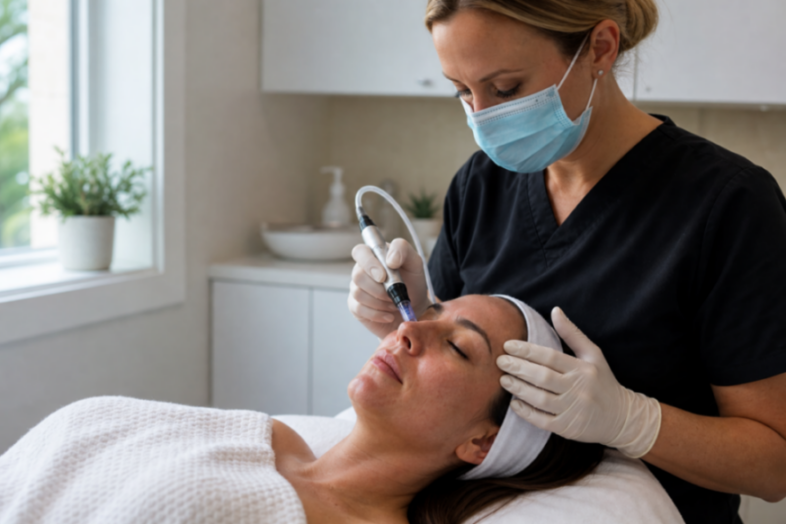
Microneedling uses sterile tiny needles to create controlled micro-injuries in the skin. Those micro-injuries trigger a natural wound-healing response that can support collagen and elastin remodeling. Depth and device type vary; nanoneedling is more superficial and typically produces less downtime. Clinicians select needle depth and technique based on treatment goals—superficial treatments target texture and glow, while deeper approaches are used for indented acne scars and thicker scar tissue.
For more on options and how they compare, see our service overview: Facial Rejuvenation Acupuncture, Microneedling, and Nanoneedling: Understanding Your Options and our specific Nanoneedling and Microneedling pages.
Common side effects (what most patients can expect)
After a professional microneedling session you can expect several predictable, short-term effects as your skin heals. These typically include:
- Redness and warmth: Treated skin often looks and feels flushed immediately after the procedure and for 24–72 hours.
- Mild swelling: Especially near the eyes and cheeks; swelling usually peaks in the first 24–48 hours.
- Pinpoint bleeding or bruising: Minor bleeding during treatment is common; small bruises can appear in some patients.
- Tenderness and tightness: A sensation similar to a sunburn can persist for several days.
- Dryness and peeling: As new skin surfaces, mild flaking or peeling may occur within several days.
These responses are expected signs of healing. Duration varies with needle depth, individual skin sensitivity, and whether topical agents were used during the procedure. Patients with sensitive or rosacea-prone skin may notice redness that feels more intense, but it should steadily improve with conservative aftercare.
Less common but important risks
More significant complications are uncommon when microneedling is performed by trained providers using sterile, regulated devices. Still, patients should be aware of:
- Infection: Bacterial or viral infection (including herpes simplex reactivation) can occur without appropriate skin prep and aftercare.
- Prolonged redness or hyperpigmentation: Rarely, inflammation can trigger pigment changes, especially in darker skin types.
- Scarring: Although microneedling is used to treat scars, aggressive treatment or improper technique may worsen scarring in rare cases.
- Allergic reactions: Reactions to topical serums applied during or after the procedure (e.g., fragrances, preservatives) are possible.
If you have a history of keloid formation, active acne with cysts, an active skin infection, or certain inflammatory skin conditions, microneedling may not be recommended. A thorough consultation helps identify contraindications and reduces the chance of avoidable complications.
Typical downtime: timeline by day
Downtime depends on treatment depth. Below is a typical timeline for an in-clinic microneedling session; shallower nanoneedling often shortens these intervals.
Immediate (0–24 hours)
- Skin appears red and feels warm; light swelling is common.
- Avoid direct sun, heavy exercise, and hot environments (sauna, steam).
- Keep skincare minimal and use products recommended by your provider.
Days 1–3
- Redness and tenderness gradually decrease but may persist.
- Peeling or light flaking can begin; do not pick or scrub the area.
- Avoid makeup until skin barrier feels intact; if you must, use mineral-based or provider-approved products.
Days 4–7
- Most visible signs of inflammation resolve for superficial treatments.
- For deeper treatments, residual pinkness may last up to 10–14 days in some people.
- Sun protection remains essential as newly generated skin is sensitive to UV damage.
Aftercare: practical, evidence-informed steps
Follow the aftercare plan your clinician provides. The goal is to support healing, prevent infection, and protect fragile new skin. General recommendations include:
- Clean gently: Use a mild, non-exfoliating cleanser and lukewarm water. Avoid active ingredients (AHAs, BHAs, retinoids) for several days unless directed otherwise.
- Moisturize: Apply a fragrance-free, non-comedogenic moisturizer to support the barrier. Ingredients that are commonly soothing and barrier-supportive include hyaluronic acid and ceramides; some clinicians recommend a simple petrolatum-based ointment for very dry areas. Some clinics provide or recommend sterile serums specifically formulated for post-needling.
- Sun protection: Daily broad-spectrum SPF 30+ is critical. Newly treated skin is photosensitive; avoid direct sun exposure until fully healed.
- Avoid makeup for 24–48 hours: If you resume makeup, use clean applicators and non-irritating products.
- No aggressive treatments: Skip waxing, chemical peels, laser procedures, or heavy facials for the interval recommended by your clinician.
- Watch topical products: Hold off on topical actives such as retinoids, exfoliants, and prescription-strength vitamin-C serums until healing is confirmed.
At Abril Acupuncture Wellness we emphasize conservative product choices and individualized plans. If you receive a post-treatment kit or instructions, use those as your primary guide and contact us with questions. Practical tip: plan procedures around social or work events so you have 48–72 hours for visible redness to subside, and bring sunglasses to protect the eye area during the first day.
When to call your clinician
Contact your provider promptly if you experience:
- Increasing pain, swelling, or redness after the expected recovery window
- Pus or yellow drainage from the treated area
- High fever or flu-like symptoms
- Signs of allergic reaction such as widespread hives or difficulty breathing
These signs may indicate infection or another complication that needs prompt evaluation. If you live locally and notice spreading redness or drainage, seek in-person assessment; remote photos can be helpful for triage but may not substitute for an exam.
Special considerations: skin type, medications, and procedures
Certain factors influence side effect risk and downtime. Discuss these during consultation:
- Skin tone: People with darker skin have a higher risk of post-inflammatory hyperpigmentation; conservative needle depths and careful aftercare help reduce that risk.
- Medications and supplements: Blood thinners, isotretinoin (Accutane) history, and certain herbal supplements can affect healing or bleeding risk. Provide a full medication history at your visit. Many providers ask about isotretinoin use and typically recommend waiting (commonly 6–12 months after completing therapy) before resurfacing procedures; discuss your specific history during consultation.
- Recent procedures: Timing matters. Avoid overlapping aggressive skin treatments close together; coordinate with your provider to plan a safe schedule. For instance, if you are considering both microneedling and a laser treatment, spacing them appropriately reduces inflammation and pigment risk.
How to decide between nanoneedling and deeper microneedling
Choice depends on goals, downtime tolerance, and skin characteristics. Consider these examples:
- If your primary concern is overall glow, pore refinement, or maintenance between other treatments, a nanoneedling approach with minimal downtime may be appropriate.
- For deeper acne scarring or thicker lines, a series of in-clinic microneedling sessions performed at greater depth may produce better remodeling but requires longer recovery.
- If you are prone to pigment issues or have darker skin, a conservative nanoneedling regimen or combination with topical pigment-control strategies may be safer.
Your clinician can recommend the best path after examining your skin and discussing lifestyle needs—e.g., whether you can take days off for recovery or must minimize visible redness for work or events.
How Abril Acupuncture Wellness approaches safety and realistic expectations
Veronica Abril performs individualized consultations to assess candidacy and align treatment goals. We discuss realistic outcomes, the number and frequency of sessions likely to be recommended, and how microneedling fits with conservative cosmetic acupuncture or nanoneedling options. For patients seeking gentler approaches, our Facial Rejuvenation and Nanoneedling services may be appropriate alternatives or complements.
We do not promise dramatic or permanent results; our focus is on safe, evidence-informed care tailored to the individual. Typically, visible improvement occurs gradually over several sessions spaced weeks apart; many treatment plans include 3–6 sessions at intervals determined by skin response and goals.
Preparing for your appointment: simple pre-care tips
- Avoid strong chemical exfoliation or retinoids for several days beforehand unless your clinician instructs otherwise.
- Avoid active cold sores or infections on the face—treatment should be postponed until healed.
- If you have a history of herpes simplex, discuss antiviral prophylaxis with your clinician.
- Arrive with clean skin; skip heavy makeup or oils on treatment day.
Local considerations: patients in Long Island and Rockville Centre should plan for seasonal effects—humid summer air and ocean exposure can irritate freshly treated skin, so avoid swimming in the ocean or pools for a few days; in winter, dry indoor heating may increase flaking and require more intensive hydration during healing.
Follow-up and treatment planning
Microneedling often requires a series of treatments spaced several weeks apart to achieve gradual improvement. Your provider will create a plan based on skin condition, treatment depth, and tolerance. We encourage scheduled follow-up so we can monitor healing, adjust technique or frequency, and provide targeted aftercare advice. If results plateau, we may combine microneedling with other conservative modalities for better outcomes.
Closing: consent, consultation, and next steps
Deciding on microneedling should start with an informed conversation. If you’re considering microneedling or a gentler nanoneedling approach, we invite you to book a consultation to discuss risks, downtime, and a plan tailored to your needs. For appointments or questions, please Book a consultation or visit our Services page to learn more about available options. You can also read more about what to expect at your first visit: What to Expect at Your First Acupuncture Appointment in Rockville Centre.
Content prepared by Veronica Abril, L.Ac., Dipl. Ac., Abril Acupuncture Wellness. For privacy practices, appointment policies, and site terms, visit our Privacy Policy and Cookie Policy.
Frequently Asked Questions
How long does microneedling downtime typically last?
Downtime varies with needle depth. Expect 24–72 hours of noticeable redness and warmth for most in-clinic treatments; residual pinkness or sensitivity can last up to 7–14 days after deeper sessions. Nanoneedling is usually shorter. Your clinician will give a tailored timeline based on your treatment.
Can I wear makeup after microneedling?
It’s best to avoid makeup for at least 24–48 hours after treatment. If you need to wear makeup sooner, use clean, non-irritating products and applicators. Confirm timing with your provider, who may recommend waiting until the skin barrier feels intact.
What should I do if I notice signs of infection after treatment?
Contact your clinician promptly if you have increasing pain, spreading redness, pus or yellow drainage, or fever. These can be signs of infection that require timely evaluation and possible medical treatment.
Will microneedling cause permanent scarring or pigmentation?
Permanent scarring is uncommon when performed correctly by trained clinicians. Post-inflammatory hyperpigmentation can occur, particularly in darker skin types, but careful technique and conservative aftercare reduce this risk. Full candidacy assessment during consultation helps identify personal risk factors.
How soon can I resume exercise or sauna after microneedling?
Avoid strenuous exercise, heavy sweating, saunas, and hot tubs for at least 24–48 hours to reduce infection risk and limit inflammation. Your clinician may recommend a longer interval depending on treatment depth.
Is microneedling safe if I have a history of cold sores?
Microneedling can reactivate herpes simplex in people with a history of cold sores. Inform your provider so they can recommend antiviral prophylaxis when appropriate or postpone treatment until the outbreak is fully resolved.