
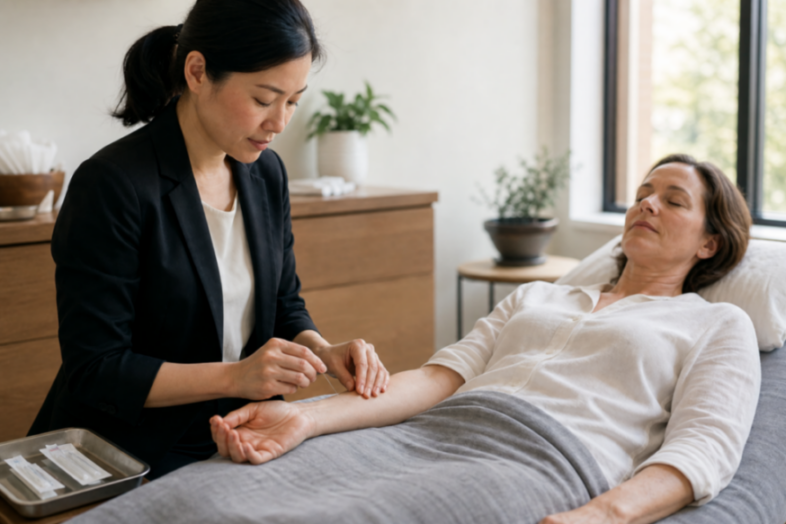
Understanding acupuncture for stress
Many adults seek complementary care to better manage day-to-day stress, sleep disruption, muscle tension, or anxiety. At Abril Acupuncture Wellness in Rockville Centre, Veronica Abril, L.Ac., Dipl. Ac., offers individualized acupuncture plans focused on symptom relief, whole-person care, and realistic expectations. Acupuncture is one option among several evidence-informed approaches that some patients find helpful for stress-related concerns; it is not a guaranteed cure, and results vary by person.
How acupuncture may help stress
From a clinical perspective, acupuncture can affect the nervous system, including modulation of pain and autonomic balance, encourage relaxation, and support improved sleep and mood in some patients. Research summaries from authoritative sources such as the National Center for Complementary and Integrative Health (NCCIH) and major medical centers indicate that acupuncture may provide benefit for symptoms commonly associated with chronic stress. Mechanistically, clinicians often describe effects on autonomic tone (increasing parasympathetic or “rest-and-digest” activity), and there is preliminary evidence that acupuncture can influence stress-related pathways such as the hypothalamic–pituitary–adrenal (HPA) axis and local neurotransmitter release. More high-quality research is needed to define which patients benefit most and why, but in practice many patients report subjective reductions in tension and better sleep after a course of care.
Common techniques used for stress-focused care
In a stress-focused treatment plan, a licensed acupuncturist will choose techniques tailored to your needs, medical history, and comfort level. At Abril Acupuncture Wellness, treatment is individualized and may combine one or more of the following:
Traditional body acupuncture
Fine, single-use sterile needles are placed at selected points on the arms, legs, torso, or head to encourage relaxation and reduce muscle tension. Sessions are generally gentle and aimed at restoring balance and easing sympathetic nervous system overactivity. For stress and sleep complaints, practitioners commonly include calming points such as Yintang (between the eyebrows), PC6 (inner forearm), and points on the wrists and lower legs; a personalized selection is always made with attention to medical history and safety considerations.
Auricular (ear) acupuncture
Ear points can be used as part of a broader plan to reduce acute anxiety or to provide adjunctive support between full-body sessions. Auricular treatments may be helpful for immediate anxiety relief or to support sleep initiation. Ear-based approaches are often chosen when patients want a shorter, targeted intervention (for example, during high-anxiety episodes) or as an adjunct when travel/time constraints make full-body sessions less practical.
Electroacupuncture and moxibustion (as indicated)
Some patients may benefit from light, low-frequency electrical stimulation applied to needles (electroacupuncture) for persistent muscle tension or chronic pain contributing to stress. Note: electroacupuncture is not used for patients with certain implanted electrical devices (such as pacemakers) without special considerations—disclose implanted devices during intake. Moxibustion (heat therapy using mugwort) can be used selectively when appropriate and safe. These are offered based on clinical judgment and patient preference; safety and comfort are prioritized.
Adjunctive manual therapies
Techniques such as cupping or gentle facial cupping may be included when indicated and desired by the patient to address muscle tightness or to support relaxation. These are conservative, noninvasive adjuncts rather than focal treatments for stress.
What to expect during a session
At your first appointment you will discuss your medical history, current stressors, sleep, digestion, and any medications. A treatment plan is designed collaboratively and emphasizes safety and realistic goals. Typical sessions last 45–60 minutes; needle retention time is commonly 20–30 minutes. If you are new to acupuncture, read What to Expect at Your First Acupuncture Appointment in Rockville Centre for practical details about intake, consent, and aftercare.
Session frequency: short-term plans and long-term maintenance
There is no one-size-fits-all schedule. Frequency depends on symptom intensity, treatment response, and personal goals. A conservative, evidence-aware approach used at Abril Acupuncture Wellness commonly follows these patterns:
Initial phase (first 4–6 weeks)
For moderate-to-high stress or associated symptoms (sleep problems, muscle pain, frequent headaches), 1–2 sessions per week is a common starting point. This allows the practitioner to assess response and adjust point selection or techniques. Practical decision guidance: if symptoms improve noticeably after 2–4 sessions, the clinician will often extend intervals between visits; if not, the plan may be modified to include different point strategies, adjunctive modalities, or coordination with other providers.
Adjustment phase (6–12 weeks)
As symptoms improve, most patients move to once-weekly sessions or every-other-week visits to consolidate gains and reinforce stress-management skills learned during treatment. For patients balancing work and family obligations in Rockville Centre and the surrounding Nassau County communities, scheduling may be arranged early morning or evening when possible to reduce disruption to daily routines.
Maintenance and prevention
Some people find benefit from monthly or bi-monthly sessions for ongoing support, while others schedule visits as-needed at times of increased stress. Maintenance care is individualized and discussed during follow-up visits. If you travel frequently or have seasonal stressors (e.g., seasonal workload fluctuations or school-year changes), a flexible maintenance plan can help anticipate and reduce flare-ups.
Combining acupuncture with other conservative strategies
Acupuncture is most effective when integrated into a broader plan that includes lifestyle and self-care measures. The clinic emphasizes whole-person treatment planning and aftercare rather than promises of dramatic outcomes.
Breathwork and short relaxation routines
Simple diaphragmatic breathing, 4-4-6 breath counts, or brief progressive muscle relaxation practiced daily can reduce sympathetic arousal and improve session outcomes. Try box breathing (inhale 4 seconds, hold 4 seconds, exhale 4 seconds, hold 4 seconds) for 3–5 minutes when you notice tension rising. Practicing at consistent times—upon waking and before bed—helps build a calming habit.
Sleep hygiene
Consistent bedtime routines, reduced evening screen time, and attention to caffeine and alcohol intake support the restorative benefits of acupuncture on sleep. Track sleep latency (how long it takes to fall asleep), number of awakenings, and total sleep time for 1–2 weeks before starting treatment to establish a baseline that you and your practitioner can use to measure progress.
Movement and mobility
Gentle daily movement—walking, stretching, yoga, or qigong—supports circulation, lowers tension, and complements needling for musculoskeletal contributors to stress. Even short, frequent movement breaks during a workday can reduce cumulative tension.
Self-acupressure and point suggestions
Your practitioner may teach a few accessible acupressure points (for example, PC6 on the inner forearm, Yintang between the eyebrows, or the auricular Shenmen point) that you can press for short periods between visits. These are taught at a general level for relaxation, with clear contraindications explained (for example, avoid vigorous pressure on certain points during pregnancy); they are not a substitute for professional needling.
Safety, contraindications, and realistic expectations
Safety is central to care. Licensed acupuncturists use single-use sterile needles and follow infection-control standards. Acupuncture is generally well tolerated, but mild side effects such as brief soreness, minor bruising, or lightheadedness can occur.
Certain conditions call for extra caution: if you are on anticoagulant medication, have a bleeding disorder, are immunocompromised, have an implanted electrical device (discuss electroacupuncture use), or are pregnant, disclose these at intake so the practitioner can plan safe, evidence-informed care. Acupuncture is not appropriate as a replacement for urgent medical or psychiatric care. If you have significant mood symptoms, suicidal thoughts, or severe medical conditions, seek immediate medical attention and inform your acupuncturist so they can coordinate care. Abril Acupuncture Wellness prioritizes clear informed consent and individualized treatment planning; see our Acupuncture and Auricular Treatments pages for service details.
How progress is measured
Progress is assessed by symptom tracking (stress levels using a simple 0–10 scale, sleep quality metrics such as sleep latency and total sleep time, headache frequency, muscle tension) and functional outcomes (work performance, relationships, daily activities). A practical approach is to keep a 1–2 week baseline before treatment and then compare regular check-ins every 2–4 weeks. The acupuncturist will review goals regularly and recommend adjustments, including referrals to primary care, mental health, or physical therapy when appropriate.
Conservative cosmetic options and stress
For patients interested in conservative cosmetic care—which can be relevant if stress affects skin health—Abril Acupuncture Wellness offers facial acupuncture, microneedling, and superficial nanoneedling as distinct, safety-focused options. These procedures are framed around realistic expectations and conservative outcomes; they are not presented as alternatives to surgical or injectable interventions. Learn more in our comparative overview: Facial Rejuvenation Acupuncture, Microneedling, and Nanoneedling and specific service pages like Nanoneedling and Facial Rejuvenation.
Choosing a practitioner and preparing for care
Choose a licensed acupuncturist who performs a thorough intake, explains risks and benefits, and collaborates on realistic goals. In New York State, practitioners are typically licensed as L.Ac.; many clinicians also hold national certification (e.g., NCCAOM). Ask about training, licensure, and infection-control procedures during your initial call. At Abril Acupuncture Wellness you’ll find a small clinical practice approach that emphasizes consultation, treatment planning, and aftercare rather than guarantees. Coordinate care with your local primary care or mental health providers when appropriate. For appointment scheduling or questions about services, please Book a consultation via our Contact Us page or browse our Services to learn more: Services.
Practical tips for maximizing benefit between visits
- Keep a brief symptom and sleep diary (morning/evening stress rating 0–10, sleep latency in minutes, number of awakenings, total sleep time).
- Practice short daily relaxation (5–15 minutes) to maintain autonomic balance.
- Limit late-day stimulants and alcohol that can undermine sleep quality.
- Communicate openly with your practitioner about medication changes, pregnancy, or new diagnoses.
- Check with your health insurer about coverage; many plans vary and FSA/HSA funds can often be used for acupuncture services. Ask the clinic about typical out-of-pocket costs and available payment options.
Final considerations
Acupuncture can be a useful component of a conservative, patient-centered strategy for stress management. At Abril Acupuncture Wellness, Veronica Abril, L.Ac., Dipl. Ac., focuses on individualized care, safety, and measured goals. If you are curious whether acupuncture might help in your case, book a consultation to discuss a personalized treatment plan and aftercare approach that fits your life.
Book a consultation: Contact Us
Note: This article provides general information and is not a substitute for individualized medical or mental health care. For urgent concerns, contact appropriate medical services.
Frequently Asked Questions
How quickly does acupuncture ease stress?
Response time varies. Some patients feel calmer after a single session, while others need several weekly sessions before noticing consistent improvements. A common initial plan is 1–2 sessions per week for 4–6 weeks to assess response.
Is acupuncture safe for people taking medications?
Generally yes, acupuncture is compatible with most medications. Tell your acupuncturist about all medications, supplements, and medical conditions during intake so the practitioner can plan safe, coordinated care.
Can I use self-acupressure between appointments?
Yes. Licensed acupuncturists can teach simple, low-risk acupressure points for relaxation. These techniques support but do not replace professional needling or medical treatment.
Are there side effects I should expect?
Side effects are usually mild and temporary, such as slight soreness, minor bruising, or brief lightheadedness. Serious complications are rare when treatment is provided by a licensed practitioner using single-use sterile needles.
How does acupuncture compare to massage or counseling for stress?
Acupuncture, massage, and counseling address stress in different but sometimes complementary ways—acupuncture may modulate nervous system activity, massage addresses muscle tension, and counseling targets cognitive and emotional coping. Many patients combine approaches for better overall outcomes.
Does insurance cover acupuncture?
Coverage varies by insurer and plan. Some commercial plans, Medicare Advantage plans, and employer benefits include acupuncture for certain conditions; others do not. Check with your insurer and the clinic about billing; flexible spending accounts (FSA) and health savings accounts (HSA) are often usable for acupuncture expenses.
How do I book a consultation at Abril Acupuncture Wellness?
To discuss whether acupuncture may help your stress-related concerns, please Book a consultation through our Contact Us page. During the consultation we review your history, goals, and create a personalized plan.