
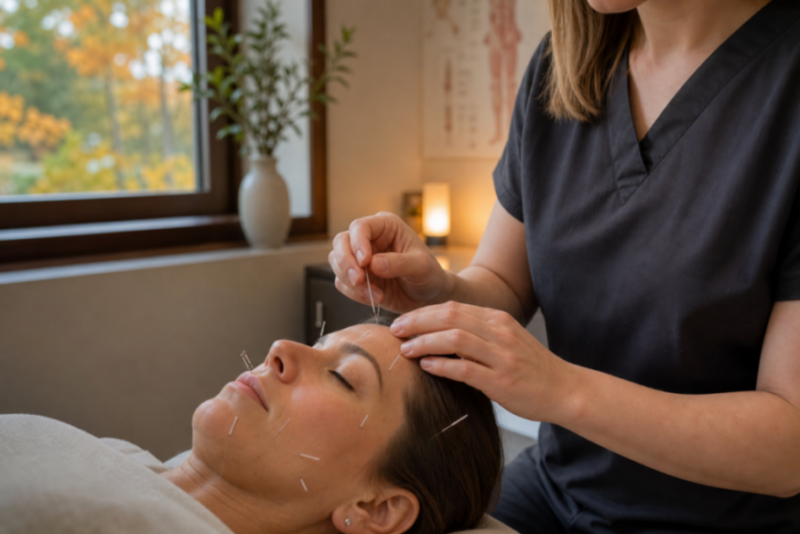
Fall Allergies and Sinus Congestion: Where Acupuncture May Fit
Autumn can bring relief from summer humidity—and for many people, a return of nasal congestion, postnasal drip, sneezing, and facial pressure. These symptoms are commonly caused by allergic rhinitis (seasonal allergies) and related sinus congestion. For adults seeking complementary, conservative care, acupuncture for fall allergies is a treatment some patients consider to reduce symptoms, support resilience, and improve overall comfort during seasonal swings.
Understanding Fall Allergies and Sinus Congestion
What causes fall-related congestion?
Fall allergies are often triggered by outdoor molds, ragweed, and other late-season pollen. In many temperate regions including the Northeastern U.S., ragweed pollen typically peaks in late summer and into autumn, and outdoor mold spore counts rise as leaves fall and organic material accumulates. When the immune system reacts, the lining of the nose and sinuses becomes inflamed and produces extra mucus, leading to congestion, reduced smell, and facial pressure. Symptoms range from mild to debilitating and commonly affect sleep, concentration, and daily functioning.
Practical, local examples: people who spend time raking leaves, working in damp basements, or doing fall yard work may notice more symptoms from mold exposure, while those who are outdoors in late summer and fall may be exposed to ragweed pollen. Simple avoidance measures—like showering after outdoor activity, changing clothes, and using HEPA filters indoors—can reduce symptom burden alongside any treatments you choose.
Standard medical approaches
Mainstream management typically includes allergen avoidance when possible, antihistamines, intranasal corticosteroids, saline nasal irrigation, and consultation with an allergist for testing or immunotherapy when appropriate. Complementary therapies such as acupuncture are sometimes used alongside these options rather than as replacements.
What the Evidence Says About Acupuncture for Allergic Rhinitis
Scientific studies of acupuncture for allergic rhinitis and nasal congestion show mixed results. Some clinical trials and reviews report symptom improvement for some patients, while other research finds limited or inconsistent benefit. Authoritative health bodies advise that acupuncture may be considered as part of an integrative approach for symptom relief but emphasize the variability of individual response.
For evidence summaries and consumer guidance about acupuncture, see the National Center for Complementary and Integrative Health (NCCIH: Acupuncture—What You Need To Know). For clinical background on allergic rhinitis and conventional management, the American Academy of Allergy, Asthma & Immunology has detailed patient-facing resources (AAAAI: Allergic Rhinitis).
Decision guidance based on current evidence: acupuncture can be a reasonable option for adults who have persistent seasonal symptoms despite first-line measures, who experience medication side effects that limit use, or who prefer a complementary approach that emphasizes whole-person care. It is not advised as a substitute for urgent or indicated medical treatments (for example, antibiotics when a bacterial sinus infection is present, or urgent care for breathing difficulty).
How Acupuncture May Fit Into a Care Plan
At Abril Acupuncture Wellness in Rockville Centre, we take an individualized, evidence-aware approach. Veronica Abril, L.Ac., Dipl. Ac., evaluates each patient’s medical history, symptoms, and goals before recommending a plan. Acupuncture for fall allergies is positioned as a complementary option focused on symptom relief, stress reduction (which can influence immune function and sleep), and support of whole-person wellness.
Possible mechanisms (theory, not proven)
- Modulation of nervous system activity that can affect nasal blood flow and mucous production.
- Regulation of inflammatory signaling at a systemic level in some patients.
- Reduction of stress and improvement of sleep, which can indirectly reduce symptomatic burden.
These mechanisms are proposed in the literature but are not uniformly demonstrated across all studies. Patients should expect a conservative explanation: acupuncture may help some people feel better, but results vary.
Common acupuncture approaches for nasal symptoms
- Systemic body acupuncture points selected to address immune balance and nasal symptoms.
- Auricular (ear) acupuncture to support symptomatic relief or reduce reflexive responses—see our auricular treatments page for more detail: Auricular Treatments.
- Adjunct modalities occasionally used in practice (e.g., mild electroacupuncture) depending on patient needs—see Electroacupuncture for information about that service.
Practical notes on what to expect during a session: needling sensations are typically mild—brief tingling, pressure, or a dull ache that often resolves quickly. Sessions commonly last 30–45 minutes, and some practitioners include relaxing supportive measures such as guided breathing or gentle heat. Any additional modalities are explained and consented to in advance.
What a Typical Treatment Plan Looks Like
Treatment varies by person. Common elements include:
- An initial consultation to review allergy history, current medications, triggers, and goals. See our guide for new patients: What to Expect at Your First Acupuncture Appointment in Rockville Centre.
- An individualized course of weekly or twice-weekly sessions for a preliminary block (often several weeks), then spacing treatments as symptoms change.
- Coordination with primary care or allergy specialists when needed—acupuncture is complementary, not a substitute for medical therapy when it’s needed.
- Aftercare recommendations such as saline nasal irrigation, trigger-reduction strategies, and sleep-support measures. For general aftercare and realistic timelines in acupuncture care, patients may find our timeline guidance helpful: Acupuncture Treatment for Chronic Lower Back Pain: Timelines and Aftercare (applies conceptually to planning and aftercare).
Sample, illustrative plan (individual plans vary): an initial consult followed by once-weekly treatments for six weeks, with symptom tracking and a reassessment at week six. If helpful, sessions may taper to biweekly and then monthly maintenance. Typical measurable goals to set with your practitioner include reducing nighttime nasal congestion from a self-rated 7/10 to 3/10, decreasing daily antihistamine use by half, or improving sleep duration by one hour. Use a simple daily diary or smartphone notes to record sleep, congestion on a 0–10 scale, and medication usage so progress can be objectively reviewed.
We emphasize realistic expectations: some patients notice quick relief, others see gradual benefit over several treatments, and some do not experience meaningful change. Because responses vary, treatment plans are reviewed regularly and adjusted based on outcomes.
Safety, Contraindications, and Practical Considerations
Safety first
When provided by a licensed practitioner using single-use sterile needles, acupuncture is generally considered low-risk. At Abril Acupuncture Wellness we adhere to strict infection-control procedures, maintain clear documentation, and discuss risks and benefits during consultation. Minor side effects can include brief soreness, small bruises at needle sites, or temporary lightheadedness; these are usually self-limited.
Who should be cautious or seek medical care first?
- People with severe or sudden breathing difficulty, high fever, or facial swelling should seek urgent medical care—these signs can indicate infection or a medical emergency and are not conditions to treat only with complementary care.
- Those on blood-thinning medications or with bleeding disorders should disclose this at intake so treatment can be planned safely.
- Pregnant persons and those with implanted medical devices should discuss specifics with their provider; some acupuncture modalities or points may be adjusted.
Coordination tip: if you are receiving allergy immunotherapy (allergy shots) or other injections, tell both providers. Most patients are advised to coordinate scheduling so treatments do not overlap on the same day if either provider recommends spacing interventions, and to monitor for any unusual reactions. Acupuncture should not replace indicated medical treatments such as intranasal steroids when those are recommended by a physician. Instead, it can be offered as part of a broader, coordinated plan with your healthcare team.
Integrating Cosmetic and Supportive Therapies (Optional)
Some patients who pursue facial acupuncture or conservative cosmetic options want guidance on safety when combining therapies. Abril Acupuncture Wellness offers conservative facial acupuncture and provides counseling on microneedling and nanoneedling options—see our facial rejuvenation overview for details: Facial Rejuvenation Acupuncture, Microneedling, and Nanoneedling: Understanding Your Options, and the dedicated Nanoneedling page for specifics. We emphasize safety, realistic expectations, and appropriate timing between procedures.
Practical Steps If You’re Considering Acupuncture for Fall Allergies
- Document your symptoms: frequency, severity, triggers, and current medications. Use a simple daily log (date, congestion 0–10, antihistamine taken Y/N, sleep hours).
- Discuss expectations and history with a licensed acupuncturist during an initial consultation so treatment can be individualized.
- Plan a short initial course and agree on measurable goals (e.g., reduced congestion at night, fewer antihistamine doses, improved sleep quality).
- Coordinate care with your medical provider when necessary, especially if you are using intranasal steroids, immunotherapy, or have chronic sinus disease.
Examples of realistic goals you might set with your practitioner: reduce nighttime congestion that wakes you twice per night to waking once or not at all; cut daytime antihistamine use from two doses to one; or decrease missed workdays due to allergy symptoms by half over eight weeks. Small, measurable targets make it easier to decide whether to continue, adjust, or stop treatment.
If you’re ready to explore whether acupuncture for fall allergies is appropriate for you, schedule a consultation with us. We welcome patients seeking evidence-informed, safety-minded care. Book a consultation to discuss a plan tailored to your needs.
Final Thoughts
Acupuncture may offer symptom relief for some people with fall allergies and sinus congestion, but responses vary and the evidence is mixed. At Abril Acupuncture Wellness, Veronica Abril, L.Ac., Dipl. Ac., emphasizes individual assessment, clear communication about realistic outcomes, and coordinated care that prioritizes safety. If you’re curious about a conservative, patient-centered approach to seasonal congestion, we invite you to learn more about our acupuncture services and to book a consultation to discuss whether this option fits your care goals.
Frequently Asked Questions
Can acupuncture cure my fall allergies or permanently stop sinus congestion?
No. Acupuncture is a complementary therapy that may reduce symptoms for some people but should not be presented as a cure or permanent fix. Abril Acupuncture Wellness focuses on realistic goals, individualized plans, and coordinating care with your medical providers.
How many acupuncture sessions will I need to see improvement?
Responses vary. Some patients notice change after a few sessions; others need several weeks. A common approach is an initial block of weekly treatments with reassessment. Your practitioner will recommend a plan based on symptoms and progress.
Is acupuncture safe if I’m taking other allergy medications?
Yes—acupuncture can generally be used alongside antihistamines and intranasal steroids. Always tell your acupuncturist about current medications and medical history so treatments are planned safely and in coordination with your healthcare team.
What should I expect at my first appointment for allergy-related symptoms?
Expect a medical history review, discussion of symptoms and goals, and a tailored treatment plan. The initial visit includes informed consent and a safe, sterile needling treatment if appropriate. See our guide for new patients: What to Expect at Your First Acupuncture Appointment in Rockville Centre.
Are there situations where acupuncture is not recommended for sinus problems?
Seek urgent medical care for severe breathing problems, high fever, or suspected sinus infection with facial swelling. Acupuncture is not a substitute for emergency or indicated medical treatments. Some modalities may be modified if you have bleeding disorders or certain medical devices—discuss these during intake.
How do you integrate cosmetic services like facial acupuncture with allergy care?
We separate goals and timing: facial acupuncture and conservative procedures like nanoneedling are discussed with attention to safety and realistic outcomes. If pursuing cosmetic treatments while managing nasal inflammation, your practitioner will advise appropriate sequencing and aftercare to reduce risk and optimize results.